Most business websites lose customers before the visitor even reaches the second page. Too many clicks, too much friction, and no clear path to action. That is why single page website design has become a smart option for companies that want a faster, cleaner, and more conversion-focused online presence.
For the right business, a one-page site removes distractions and keeps attention exactly where it matters – on your offer, your proof, and your call to action. But it is not the right fit for every company. If you are deciding whether to build one, the real question is not whether it looks modern. The real question is whether it helps you generate more leads, sales, or inquiries with less effort from the user.
What single-page website design really means
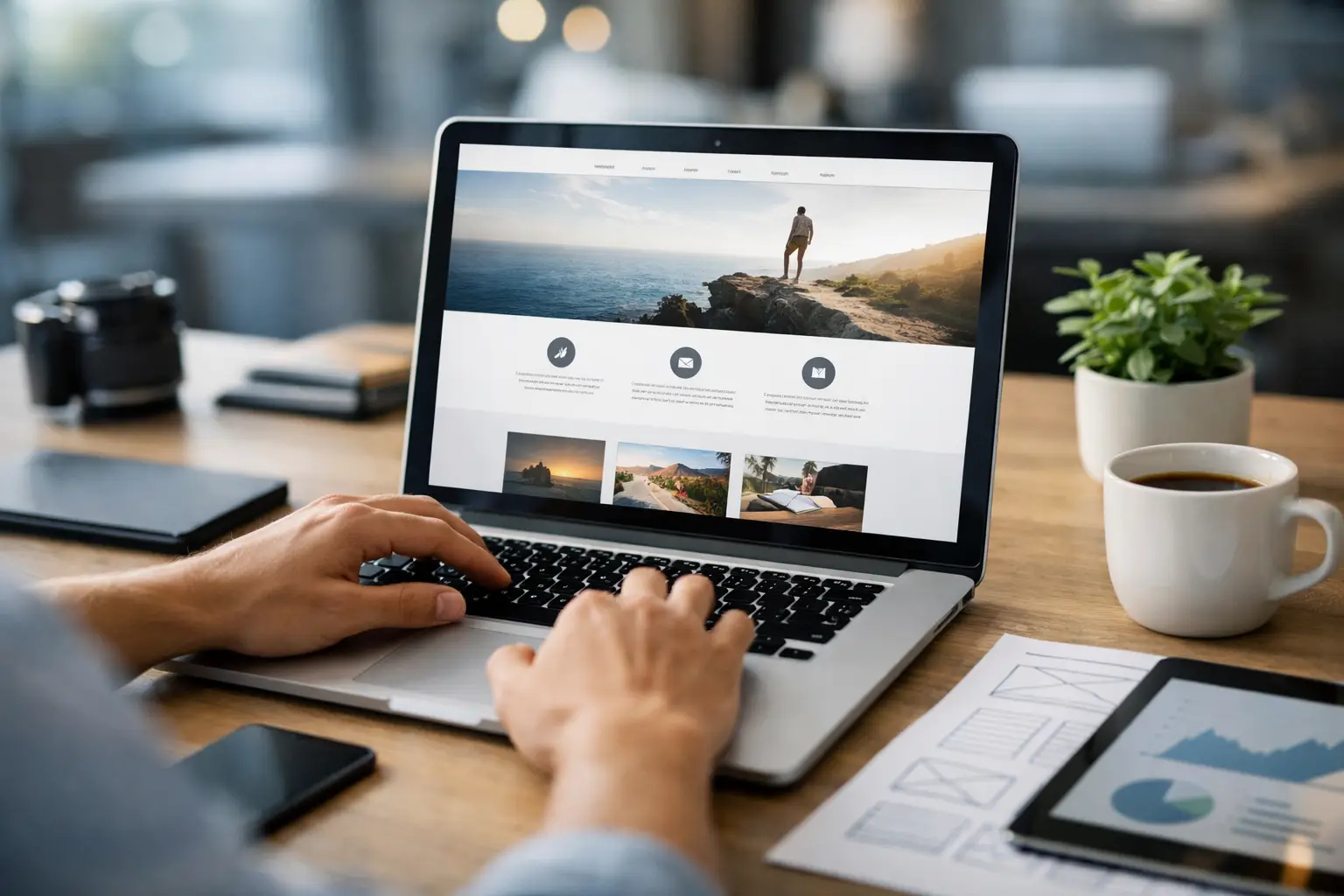
Single-page website design puts your essential content on one continuous page instead of splitting it across multiple pages. Visitors scroll through your value proposition, services, testimonials, FAQs, contact form, and call to action in one guided flow.
This structure works well when your message needs clarity more than complexity. A visitor lands, understands what you do, sees why they should trust you, and takes action. There is no hunting through menus and no drop-off between pages.
That simplicity is exactly why many startups, local service businesses, campaign-based brands, consultants, and product launches use this model. If the goal is to get someone to book, call, message, or submit a form, one strong page can often outperform a bloated site.
Why businesses choose a single-page website design
Single-page websites load quickly
Speed matters, but focus matters even more. A single-page layout forces discipline. You stop filling a website with filler and start building around what actually moves customers forward.
Single-page websites cost less
For growing businesses, that can be a major advantage. Instead of spending time and budget on building five or ten pages that few people read, you invest in one high-performing asset. It is often quicker to launch, easier to maintain, and more affordable to update over time.
Single-page websites convert well
There is also a strong conversion benefit. When the page is structured correctly, every section supports the next. The headline pulls attention. The service section explains the offer. Social proof reduces hesitation. The contact form appears at the right moment. This creates a guided sales journey rather than a loose collection of pages.
Single-page websites serve as a landing page
From a paid advertising perspective, single-page websites can also work well for targeted campaigns. If you are sending traffic from Google Ads or social ads, a focused one-page destination often creates less confusion and better conversion intent than a traditional site with too many navigation choices.

How much does a single-page website design cost?
For most businesses, a professionally built single-page website in the UAE usually falls somewhere between AED 1,500 and AED 2,500. That is a realistic range for a proper business website built by an agency or experienced freelancer, using a custom design.
At the lower end, around AED 800 to AED 1,500, you are usually getting a template-based design, light customization, basic contact form setup, and standard mobile responsiveness. This can work for very small businesses that need a quick online presence and have a limited budget.
Recommended post: How much is the website design cost in Dubai or anywhere in the UAE?

When a one-page site is the right move
A one-page website is typically the right choice when your business has a clear offer, a specific target audience, and a single primary action you want people to take. This could involve booking a consultation, requesting a quote, calling your team, or purchasing a featured service.
It is especially effective for service providers with a narrow offering, event websites, startups validating a new concept, restaurants with simple digital needs, personal brands, product pre-launch pages, and businesses running short-term campaigns.
It can also make sense as a first-stage website. Many companies do not need a large website on day one. They need a professional online presence that loads quickly, explains the offer, and starts generating inquiries. A well-built one-page site can do that without unnecessary cost.
When single page website design is not enough
This is where smart strategy matters. Single-page website design is not automatically better. It is better only when it matches the business model.
- When you want to showcase multiple services: If your company offers many services, targets different industries, publishes regular content, or depends on organic search across multiple keywords, a one-page setup can become limiting. The more complex your offering, the harder it becomes to explain everything properly on one page without making it long, crowded, or difficult to navigate.
- If you are serious about SEO: SEO is also a factor. A one-page site can rank, but it gives you fewer opportunities to target different search intents compared with a multi-page site. If you want dedicated pages for web design, eCommerce development, mobile apps, ads management, and location-based searches, then a broader website structure is often the stronger long-term move.
- When you have lots of information to showcase: The same applies to businesses that need detailed case studies, service breakdowns, support sections, or resource content. In those cases, one page may help as a landing page, but not as the entire website.

Common mistakes that weaken one-page websites
- The biggest mistake is trying to force a full corporate website into one scroll. That usually leads to oversized pages packed with generic text, weak hierarchy, and no real direction.
- Another common issue is overdesign. Animations, effects, and fancy transitions may look impressive in a pitch, but if they slow down the page or distract from the message, they hurt performance. Good design should support conversion, not compete with it.
- Weak messaging is another problem. Many one-page websites spend too much space talking about the company and not enough explaining why a customer should care. A visitor wants to know what problem you solve, how you solve it, and what happens next.
- Some businesses also forget the technical side. Poor image optimization, messy mobile layouts, weak forms, and unclear button placement can hurt lead generation even when the visual design looks polished.
How to decide what your business needs
If your business has one core service, one target audience, and one main conversion goal, a single-page website can be a strong and cost-effective option. It gives you speed, clarity, and a cleaner path to inquiries.
If your business is expanding, targeting multiple search terms, or serving different customer segments, you may need something more scalable. In that case, a one-page site can still play a role as a campaign page or launch page, while the main website handles broader content and SEO growth.
This is why the best approach is not choosing based on trend. It is choosing based on revenue strategy. The right website structure should support your sales process, your traffic sources, and your growth goals.
For many companies, the winning answer is not simply design. It is designed to be paired with smart messaging, technical quality, and ongoing optimization. That is where experienced website agencies provide consultation. A results-focused agency such as Innomedia Technologies looks beyond appearance and builds around performance, so your website is not just online – it is working.