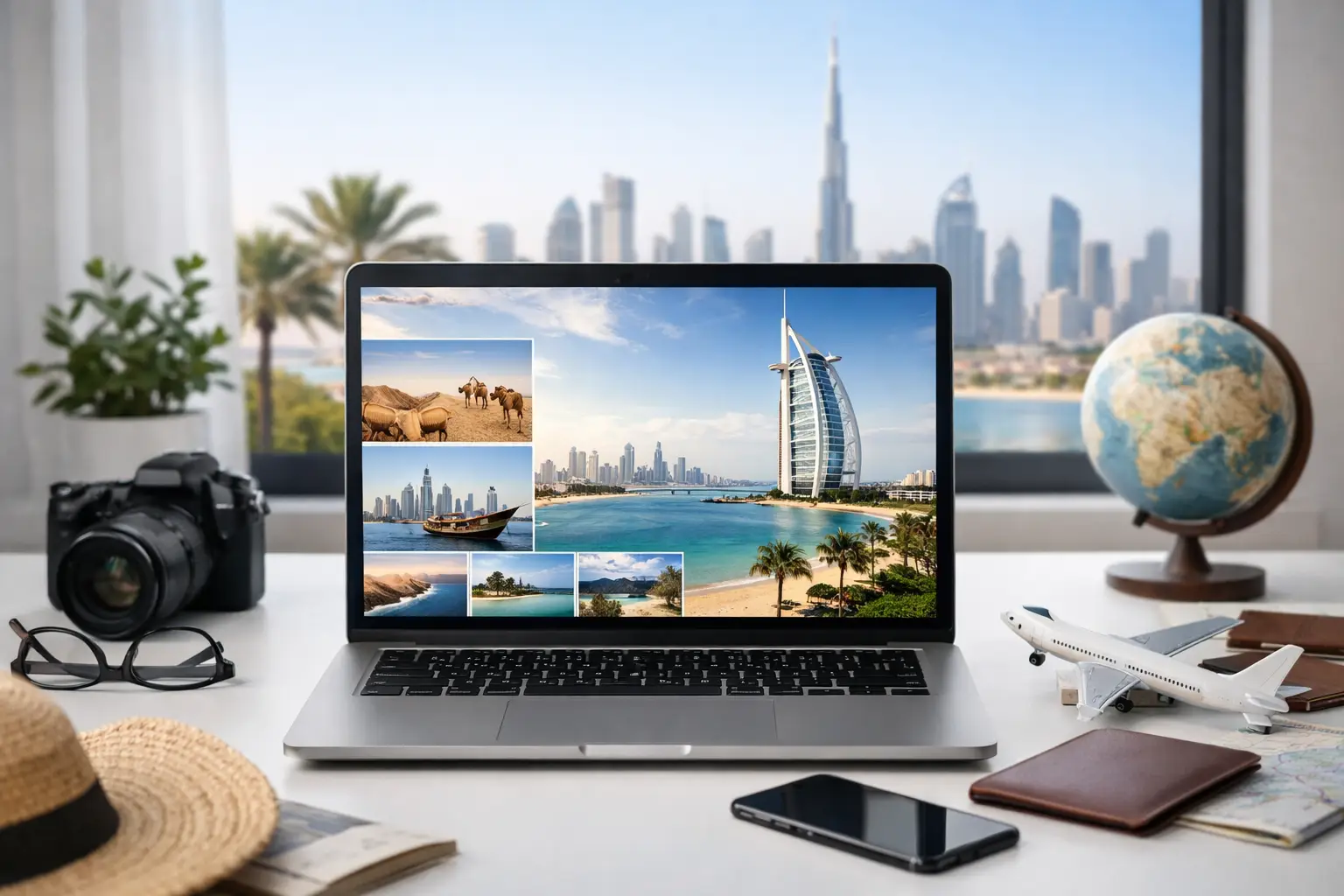
A traveler lands on your website at 11:30 PM, compares three agencies in five minutes, and decides who gets the inquiry. That is why website design for a travel agency in the UAE is not a branding extra – it is a sales tool. If your site looks dated, loads slowly, or makes it hard to request a quote, you are losing bookings before your team even gets a chance to sell.
Travel businesses in the UAE operate in a competitive market. Customers are comparing holiday packages, visa support, corporate travel options, local tours, and luxury experiences across multiple tabs at once. Your website has to build trust fast, show value clearly, and move people toward action without confusion.
Travel agency website needs a sales focus
A travel agency website should do more than look attractive. It should help convert visitors into inquiries, calls, and confirmed bookings. Beautiful layouts matter, but only if they support the business goal.
Many travel agencies invest in visuals and forget the structure underneath. The result is a site with nice destination photos but weak performance. Visitors cannot quickly find package details, pricing feels unclear, forms are too long, and mobile navigation becomes frustrating. In a market where customer attention is short, that gap directly affects revenue.
A high-performing travel website usually gets three things right.
- First, it creates immediate trust through clear branding, professional presentation, and strong service information.
- Second, it reduces friction so users can browse packages, ask questions, and contact your team with minimal effort.
- Third, it supports marketing by being ready for SEO, paid traffic, and landing page campaigns.
That last point matters more than many business owners expect. If you are running Google Ads or social campaigns, sending paid traffic to a weak website wastes budget. Better website design improves not just appearance, but return on ad spend.
What travelers expect
Customer expectations are higher than they were a few years ago. People want fast answers, mobile convenience, and confidence that they are dealing with a real, capable company. For UAE-based agencies, that often means serving both residents and international visitors, sometimes across multiple languages and service categories.
Your website design should make the basics effortless. Visitors should immediately understand what you offer, who you serve, and how to take the next step. If your agency handles holiday packages, visas, flights, hotel bookings, cruises, or corporate travel, each service needs its own clear space. When everything is crammed onto one page, users feel uncertain.
Trust signals also carry real weight in this industry. Clients want to see professional service, user-friendly package formats, strong testimonials, WhatsApp or phone accessibility, and signs that your business is established and responsive. In travel, people are not just buying a product. They are buying confidence.
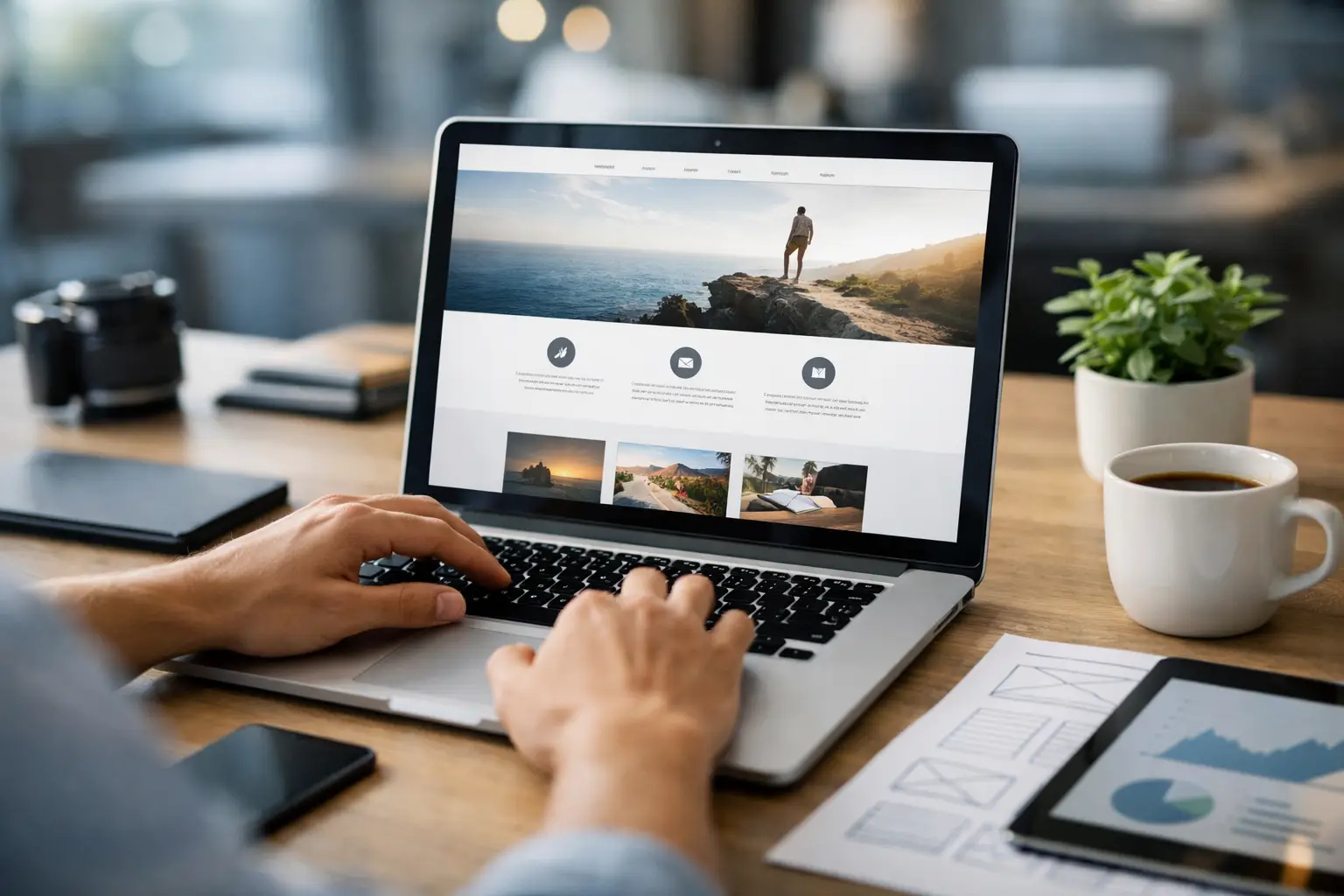
Important pages of a travel agency website
Not every page on your website deserves equal attention. Some pages exist to inform, but others should actively generate leads. A smart website structure puts commercial pages at the center.
#1 Homepage
Your homepage should quickly explain your value, show your strongest travel categories, and push users toward inquiry. A generic welcome message is not enough. The page should answer practical questions fast: Do you offer international tours, visa assistance, custom itineraries, or corporate travel management? Why should someone choose your agency over the next one?
#2 Services
Service pages are where many conversions begin. Separate pages for holiday packages, visa services, honeymoon trips, desert safaris, Umrah packages, cruise bookings, or MICE travel can help users land on exactly what they need. This also gives your business stronger search visibility.
#3 Packages
Package pages need careful balance. Too little detail and users hesitate. Too much clutter and they leave. The best package layouts include destination highlights, duration, inclusions, exclusions, pricing approach, and a clear inquiry path. It depends on your business model whether you show exact pricing or ask users to request a quote. If prices change often, quote-based forms may be more practical. If your packages are standardized, visible pricing can improve conversion.
#4 Contact us
Contact pages should be simple, not overloaded. If your goal is leads, then every extra field reduces the chance of completion. Ask for what your sales team genuinely needs, then follow up quickly.
Don’t forget about these design elements
A travel website has to create excitement, but excitement alone does not close deals. The strongest design choices are the ones that support speed, clarity, and action.
- Mobile responsiveness is non-negotiable. A large share of travel browsing happens on phones, especially when users are comparing options casually through social media or search. If your menus break, forms are hard to complete, or images slow the site down, you are losing business on the device that matters most.
- Speed is another major factor. Heavy sliders, oversized image galleries, and poorly built themes can damage user experience and search performance. Travel sites often rely on visuals, but visuals should be optimized instead of overwhelming the page.
- Calls to action should be visible throughout the site. That does not mean aggressive pop-ups on every scroll. It means smart placement of buttons like Request a Quote, Plan My Trip, Talk to Our Team, or Get Visa Assistance. The user should never wonder what to do next.
- Strong content architecture also improves results. Important details should appear in the correct order, with clear headings and concise sections that are easy to scan. Many agency websites fail because they attempt to convey too much information at once. Clear structure sells better.

Common mistakes travel agencies should avoid
The biggest mistake is treating the website like a brochure instead of a working sales asset. That mindset leads to weak calls to action, outdated package listings, and no clear path to inquiry.
Another common problem is overdesign. Too many animations, banners, and visual effects can make the site feel busy while distracting from the booking journey. Travel is a visual industry, but simplicity often converts better.
Agencies also underestimate the value of ongoing support. Travel offers change, seasonal campaigns shift, and landing pages need updates. A website is not a one-time job if you want long-term growth. It needs maintenance, refinement, and occasional redesign based on performance.
If your current site looks acceptable but does not generate enough leads, the issue may not be obvious at first glance. It could be weak UX, poor mobile behavior, slow load time, unclear service messaging, or disconnected ad traffic. These are fixable problems when the website is built with business results in mind.
Choosing the right website partner
When selecting a website provider in the UAE for your travel website, experience matters, but so does commercial understanding. You do not just need a designer. You need a team that understands conversion, user flow, content structure, mobile performance, and how websites support lead generation.
That is especially true if you plan to scale through SEO, Google Ads, or social campaigns after launch. A low-cost build can become expensive later if the structure is wrong and needs to be rebuilt. It is smarter to invest in a website that is ready to grow with your business.
For travel agencies in the UAE that want a stronger digital presence, working with an experienced results-driven team like Innomedia Technologies can make that process far more efficient. The goal is not simply to launch a website. The goal is to build an online platform that helps your business attract attention, win trust, and convert interest into revenue.