A business website usually does not get hacked because someone specifically targeted your brand. More often, it gets swept up in automated attacks looking for easy openings. That is the real answer behind how WordPress websites get hacked – most breaches happen through preventable weaknesses, not movie-style cyberattacks.
For business owners, that matters because a hacked WordPress site is not just a technical issue. It can damage your rankings, break lead forms, infect visitors, disrupt sales, and hurt trust fast. If your website supports inquiries, bookings, or online orders, even a short compromise can cost real revenue.
How do WordPress websites get hacked most often?
WordPress itself is not the problem. It powers a significant share of the web, making it a popular target. Attackers target WordPress sites because there are numerous instances of them, and many are poorly maintained.
The most common entry point is outdated software. That includes the WordPress core, themes, and plugins. When developers release security updates, they are fixing known vulnerabilities. If a business delays those updates for weeks or months, attackers get a clear window to exploit them.
Plugins are a major risk because many sites rely on too many of them, and not all plugins are built or maintained well. A single vulnerable form plugin, page builder add-on, or WooCommerce extension can expose the entire website. The same goes for themes, especially nulled or pirated versions. Those often contain hidden malicious code from the start.
Weak passwords are another common cause. Admin accounts with simple passwords, reused passwords, or usernames like admin make brute-force attacks much easier. Attackers use bots that try thousands of login combinations automatically. If there is no login protection in place, it becomes a numbers game.
Poor hosting environments can also create serious exposure. Cheap hosting is not always insecure, but overcrowded servers, outdated PHP versions, and weak server-level protections make attacks more likely. In some shared hosting setups, one compromised site can even affect others on the same account.
The main ways hackers break into WordPress sites
Outdated plugins and themes
This is the biggest issue on many business websites. A plugin may work fine on the surface while quietly exposing your site in the background. Once a vulnerability becomes public, attackers scan the web for websites still using that version.
This is why updates should not be treated as optional admin work. They are part of protecting your digital asset. The trade-off, of course, is that updates can sometimes conflict with custom functionality. That is why smart maintenance matters more than random clicking. You want tested updates, not neglected software.
Weak login security
If your admin login is easy to guess, your site is easier to compromise than you think. Brute-force bots do not need a personal reason to target you. They just cycle through websites looking for weak credentials.
This gets worse when multiple users have administrator access or when old staff accounts were never removed. In many cases, the issue is not one bad password. It is poor access control across the whole site.
Malware hidden in pirated themes or plugins
Many businesses try to cut setup costs with free copies of premium tools. That shortcut can become expensive quickly. Nulled plugins and themes often include backdoors that give attackers ongoing access, even if the site appears normal at first.
That kind of compromise is especially damaging because it can stay hidden for a long time. You may not notice anything until your hosting account is suspended, your site starts redirecting visitors, or Google flags it as unsafe.
Insecure hosting or server configuration
Your website security is not only about WordPress. Server settings, file permissions, firewall rules, PHP versions, SSL setup, and malware scanning all play a role. A poorly configured server leaves more gaps for attackers to exploit.
This is where many growing businesses run into trouble. They invest in design and marketing but leave infrastructure as an afterthought. If the foundation is weak, performance and security both suffer.
Phishing and stolen access
Not every hack comes through code. Sometimes attackers simply steal credentials through phishing emails, infected devices, or fake login pages. If one team member’s email or password is compromised, the website can be compromised.
For businesses with multiple stakeholders, this risk increases. Agencies, developers, marketers, and internal staff may all have access. Without good controls, one compromised account can open the door.
What hackers usually do after they get in
A hacked website does not always go offline immediately. In fact, many attackers want the site to stay live while they use it.
Sometimes they inject spam pages to manipulate search rankings.
Sometimes they place malicious scripts that redirect visitors to scam websites.
On e-commerce websites, they may try to steal customer information or payment-related data.
In other cases, they create hidden admin users so they can return later, even if you think the issue is fixed.
This is what makes WordPress hacks so frustrating for business owners. The visible problem is often only part of the damage. Removing obvious malware does not always remove the root cause.
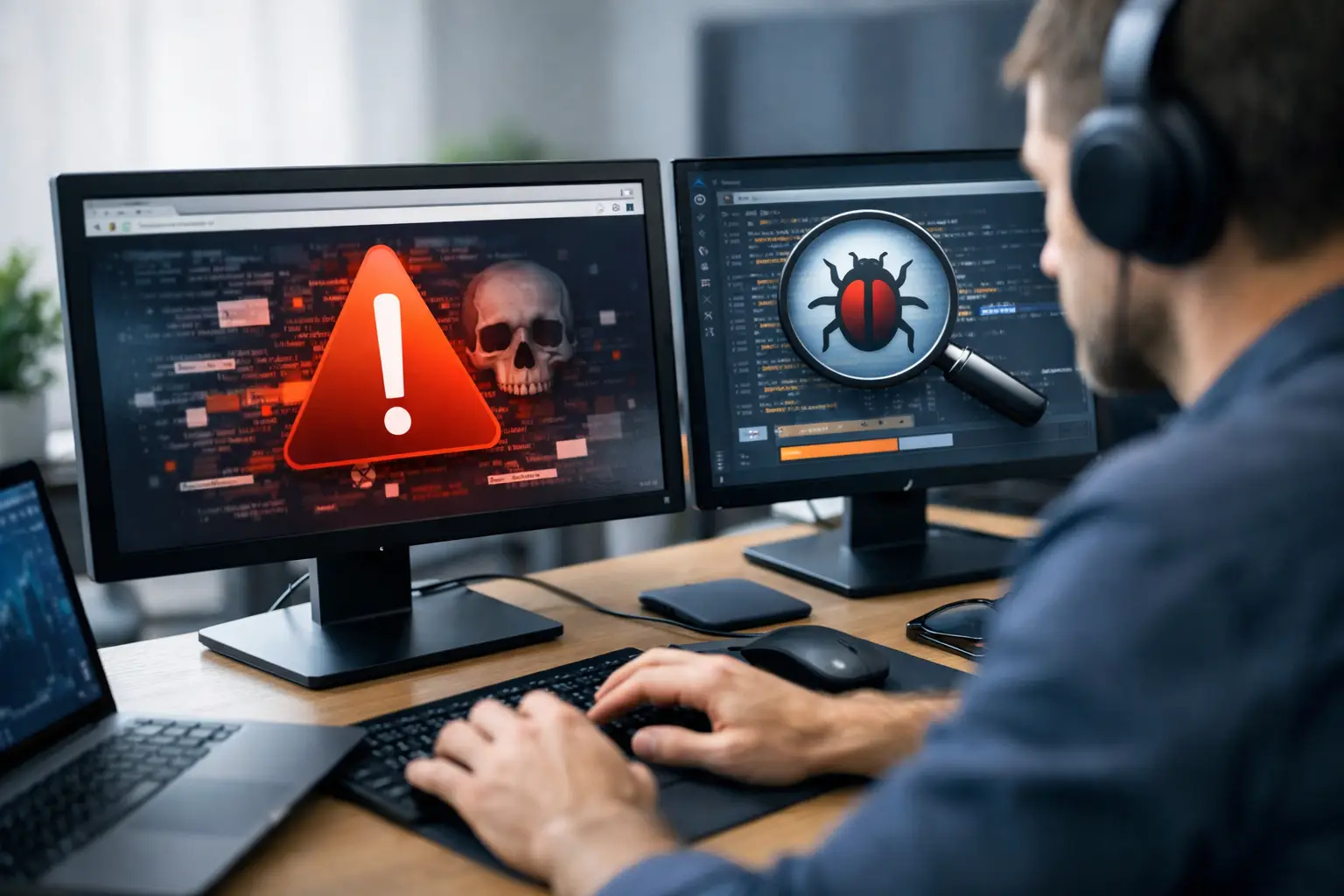
Warning signs your WordPress site may be hacked
A hacked site does not always announce itself clearly. Some signs are obvious, while others look like ordinary technical problems.
If your website suddenly becomes slow, shows strange pop-ups, redirects to unrelated pages, or displays spam content, that is a strong warning.
The same goes for unexplained admin users, security alerts from your host, sudden ranking drops, or browser warnings telling visitors the site may be dangerous.
Sometimes the first sign is commercial, not technical. Leads stop coming in. Product pages behave oddly. Ad campaigns get rejected because the landing page is compromised. That is why website security should be treated as a growth issue, not just an IT issue.
How to reduce the risk of a WordPress hack
The good news is that most WordPress attacks are preventable with the right setup and ongoing support. No website is guaranteed to be untouchable, but a properly maintained one is dramatically harder to exploit.
Start with disciplined updates. Keep WordPress core, themes, and plugins current, but do it carefully. Updates should be tested, monitored, and backed up.
Use strong passwords and two-factor authentication for all admin users. Limit who has administrator access, remove old accounts, and avoid generic usernames. If several people need access, give each person the right role instead of handing everyone full control.
Choose reputable plugins only, and use fewer of them. Every plugin adds functionality, but it also adds risk. If a feature is not helping your business, it should not stay on the site.
Reliable hosting also makes a difference. Good hosting supports updated server software, malware scanning, backups, SSL, and stronger isolation. It may cost more than bargain hosting, but downtime, cleanup, and lost leads cost more.
Regular backups are essential, but backups alone are not enough. You also need to know they work and that they can be restored quickly. A backup strategy without testing is just wishful thinking.
Security monitoring helps catch problems earlier. Firewalls, login protection, malware scans, and activity logs create layers that make attacks harder and recovery faster.
Why business websites need ongoing maintenance
Many companies launch a site and assume the job is finished. That is where risk builds over time. WordPress websites are not static brochures. They are active systems with software dependencies, user access, forms, databases, and integrations.
That means web maintenance is not a luxury add-on. It is part of protecting your brand, your SEO value, and your revenue pipeline. If your website supports lead generation or online sales, security neglect becomes a business liability.
For that reason, many companies prefer a managed approach instead of reacting after damage is done. With experienced support, updates are handled properly, vulnerabilities are addressed early, and issues can be fixed before they interrupt operations. For growth-focused businesses, that is a smarter use of budget than emergency cleanup after a breach.
At Innomedia Technologies, we see this often with business owners who invest in a website but not in ongoing protection. The strongest results usually come from treating the website as a live business asset that needs support, performance oversight, and security attention at the same time. Therefore, every business owner must hire a web agency not just to take care of their website but also to troubleshoot or remove malware when needed.