A website that looks acceptable but fails to generate inquiries, sales, or repeat business is not doing its job. That is where website enhancement matters. For growing businesses, it is not about making a site look newer for the sake of appearance. It is about improving the parts of the website that directly affect visibility, user trust, conversion rates, and long-term revenue.
Many business owners wait too long to fix an underperforming site because the website is still live and technically working. But working is not the same as producing results. If pages load slowly, forms are ignored, mobile users struggle, or customers drop off before checkout, the website is quietly costing the business money every day.
What Website Enhancement Really Means
Website enhancement is the process of improving an existing website so it performs better for users and for the business behind it. That can include design updates, speed improvements, mobile optimization, stronger calls to action, better content structure, technical fixes, security improvements, and conversion-focused changes.
The key point is this: enhancement is not always the same as a full redesign. Sometimes a complete rebuild is the right move, especially when the website is outdated, hard to manage, or built on weak foundations. But in many cases, targeted improvements can create a major performance lift without the time and cost of starting over.
That distinction matters for businesses that want growth but also need to control spending. A smart enhancement strategy focuses on the changes that move the needle first.
How Website Enhancement Grows Business
A website is often the first sales touchpoint a customer has with a business. If that experience feels confusing, slow, or unconvincing, people leave. They do not usually complain. They just move on to a competitor.
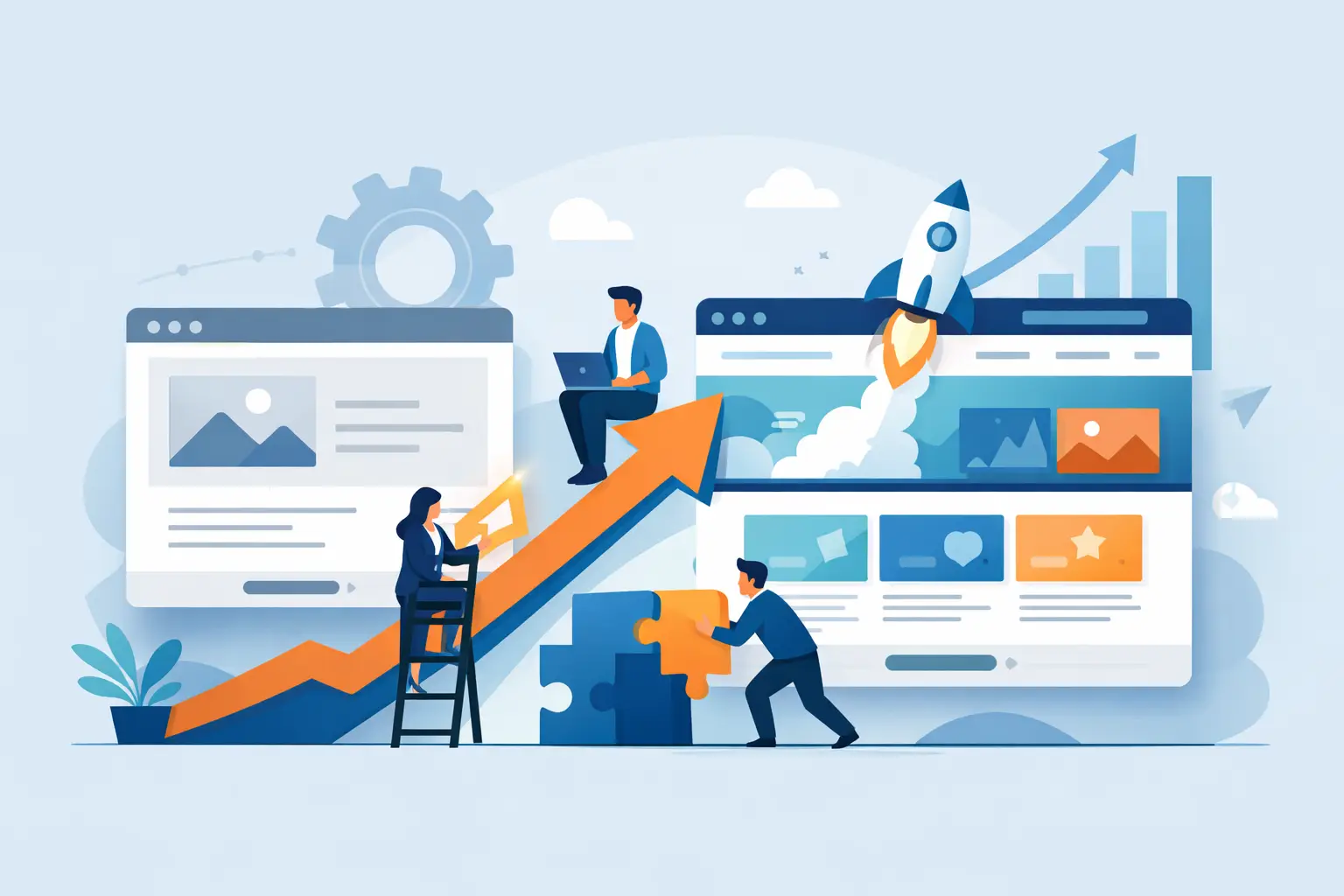
A stronger website improves more than appearance. It can reduce bounce rates, increase form submissions, improve search visibility, support paid ad performance, and turn more visitors into paying customers. This is why website enhancement should be treated as a business growth decision, not just a design task.
For example, a landing page with poor structure can waste an ad budget even when the campaign itself is well managed. An online store with friction in the checkout process can lose high-intent buyers at the last step. A service website with weak messaging can attract traffic but fail to convert it. In each case, the problem is not traffic alone. The problem is what the website does with that traffic.
Website Enhancement Areas
#1 Speed & technical performance
Website speed has a direct effect on user behavior. Slow pages increase drop-off, especially on mobile devices. This is even more serious for businesses investing in paid traffic, because every click has a cost attached to it.
Improving speed may involve image compression, code cleanup, better hosting, script optimization, or fixing plugin overload. These are technical details, but the business outcome is simple: faster websites keep more users engaged and create more opportunities to convert.
#2 Mobile experience
Most businesses now receive a large share of traffic from smartphones. Yet many websites are still designed with desktop habits in mind. Buttons are too small, sections are hard to scan, forms are frustrating, and pages feel cluttered on smaller screens.
A proper mobile enhancement is not just about making the layout fit. It is about making the journey easier. That means clear messaging, easy tapping, faster loading, visible contact actions, and fewer barriers between the user and the next step.
#3 Conversion-focused design
A visually attractive website is useful, but looks alone do not produce leads. Conversion-focused design is about guiding users toward action. That may include stronger page hierarchy, better placement of calls to action, clearer service explanations, shorter forms, trust elements, and fewer distractions.
Sometimes small changes outperform major visual overhauls. A rewritten headline, a better inquiry form, or a cleaner service page can make a measurable difference. The best enhancement work is rarely random. It is tied to a business goal.
#4 Content clarity and structure
Many websites lose potential customers because they explain too little or too much. Some are vague and generic. Others overwhelm visitors with dense text and technical language.
The right content structure helps visitors understand what the business offers, who it serves, and why it should be trusted. Strong website content answers key questions quickly. It removes hesitation and helps people take the next step with confidence.
#5 Security and reliability
Security is often ignored until something goes wrong. Malware issues, broken forms, plugin conflicts, and expired components can damage credibility fast. They can also affect search performance and ad campaign results.
Website enhancement should include reliability checks, regular updates, backups, and protection against common threats. A secure website protects both the business and its customers. It also reduces the risk of downtime and emergency repair costs later.
Website Enhancement Vs Full Redesign
Not every site needs to be replaced. In fact, rebuilding too early can waste budget that would be better spent on focused improvements.
If the website has a workable structure, usable content, and a stable platform, enhancement may be the better option. This is especially true when the main problems are speed, mobile usability, conversion flow, or technical maintenance.
On the other hand, if the site is built on outdated code, is impossible to manage, visually off-brand, or missing critical functionality, a redesign may be more cost-effective over time. The right decision depends on the website’s condition, business goals, and the urgency of results.
For many companies, the most effective approach is a staged one. Fix the performance and conversion issues first. Then improve design, content, and advanced functionality as the business grows.
Priority Tasks For Website Enhancement
- Security Fixes: The top priority for website enhancement should be to secure the website.
- Website Speed: Website loading must also be considered a priority when enhancing a website.
- Mobile Optimization: A mobile-friendly design is very important for any Dubai business because most users use their smartphones to browse websites.
- UX Improvements: Next comes the UX improvement for the website enhancement.
- Conversion Optimization: If you are really serious about getting leads or sales from your website, it must be enhanced for more conversions.
- SEO Enhancement: SEO is a great long-term strategy to get business from a website. Therefore, SEO should also be an important part of any website enhancement process.
Role Of a Web Designer in Enhancement
A professional web designer plays a crucial role in website enhancement by improving user experience, visual appeal, functionality, and conversion rates. Whether you’re planning a new web design project or a complete website redesign, the expertise of a skilled designer can significantly impact your online success.
A web designer focuses on creating intuitive layouts, mobile-friendly interfaces, and engaging visuals that encourage visitors to stay longer and take action. They work closely with a website developer to ensure the website not only looks great but also performs efficiently across all devices and browsers.
Professional web designers also analyze user behavior and identify areas that may be causing visitors to leave the website. By implementing design improvements and usability enhancements, they help create a seamless customer journey.
Website Enhancement Is an Ongoing Growth Strategy
A website should evolve with the business. New services, changing customer expectations, ad campaigns, search trends, and mobile behavior all affect what the site needs to do. A website that performed well two years ago may already be losing ground today.
That is why enhancement should be treated as an ongoing strategy, not a one-time task. Regular improvements keep the website competitive, reduce technical risk, and support stronger marketing results over time. More importantly, they help the business stay ready for growth instead of constantly reacting to problems.
If your website is attracting visitors but not delivering enough leads or sales, the issue may not be traffic alone. It may be that your next phase of growth starts with making the website work harder for the business you want to build.
Recommended post: How much is the website enhancement cost in Dubai/UAE?